




How to Choose a Mobile App Company in Tampa

October 9, 2026

Share this article

A mobile app development company in Tampa can be the right partner for a small business when it offers clear communication, practical product guidance, transparent pricing, reliable support, and ownership terms you understand. Compare local, remote, and offshore teams by capability—not location alone—and choose the partner best suited to your goals, budget, and operating style.

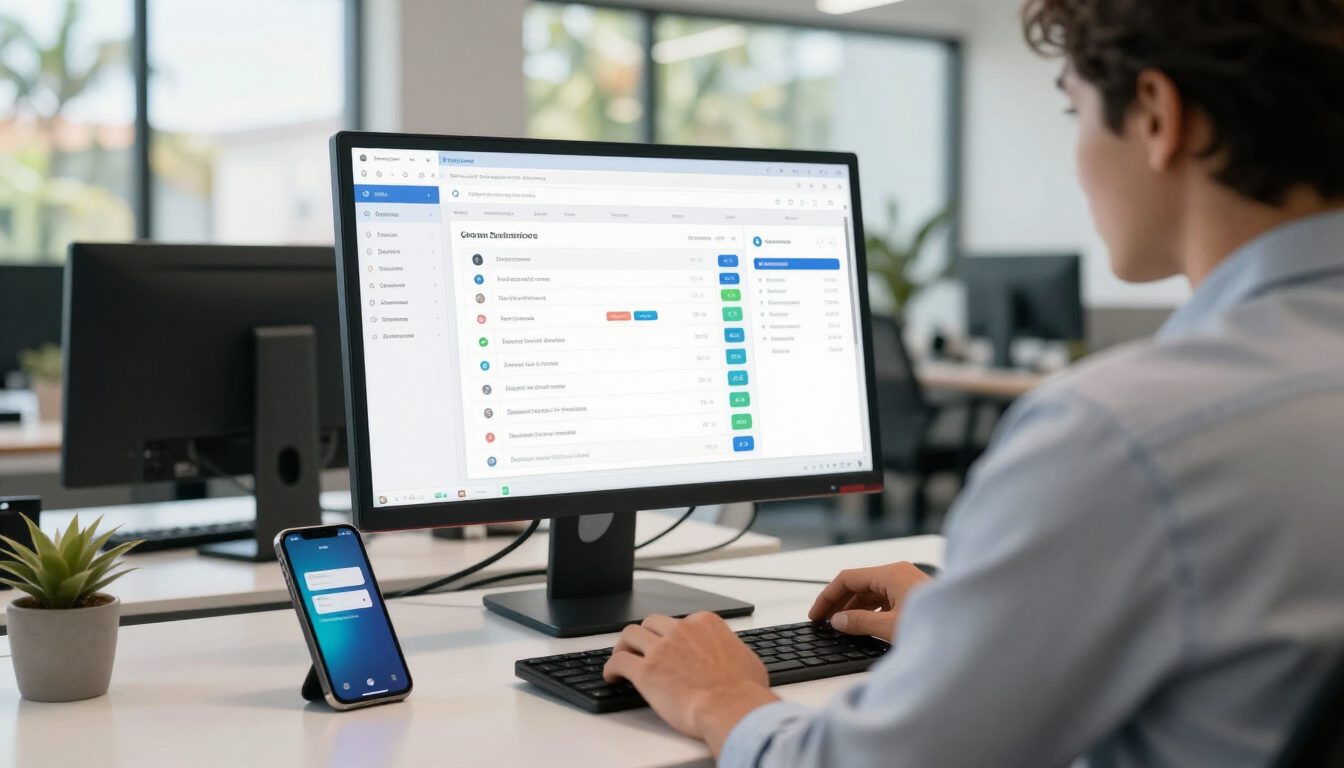
Small business owner comparing a Tampa mobile app development company

What should a small business look for in a Tampa app developer?

Start by defining the business problem before comparing agencies. A strong partner should help you clarify whether you need a customer-facing app, an internal operations tool, a booking experience, an e-commerce app, or a focused first version of a larger idea.

Look for a development company that can explain technical decisions in plain language and connect each feature to a practical business purpose. Important capabilities include:

  • Product discovery and user-flow planning
  • iOS, Android, or cross-platform development
  • API, CRM, payment, booking, and database integrations
  • User testing, security planning, analytics, and maintenance
  • A clear process for future improvements and support

A developer’s portfolio can show visual quality and technical range, but it should not be the only deciding factor. Ask how the team approaches projects similar to yours and how it handles changing requirements.

Local Tampa developers versus international teams

A local Tampa team may make collaboration easier for owners who prefer meetings during familiar business hours. You may also find it simpler to discuss your market, visit when appropriate, and identify who is accountable for the relationship.

An international or offshore team can offer access to a broader talent pool and may have competitive project rates. That can work well when requirements are already detailed and the client has someone available to manage communication, testing, and decisions.

Neither model is automatically better. Compare the working experience you need:

| Consideration | Tampa or U.S.-based partner | International or offshore team | |---|---|---| | Communication | Usually easier during U.S. hours | May require planned handoffs | | Accountability | Often a clearly visible local relationship | Can vary by vendor structure | | Cost | May reflect local labor and project management | Rates may be lower, but coordination varies | | Support | Easier to align with your operating hours | Confirm response windows and escalation | | Context | More familiarity with U.S. customers and compliance discussions | May bring diverse technical experience |

The most important question is not “Where is the developer?” It is “Can this team consistently understand, build, explain, and support what my business needs?”

How do communication and time zones affect app projects?

Communication problems often create hidden costs. Delayed answers can block design approvals, testing, content delivery, and decisions about integrations. Time-zone differences are manageable when a team has documented workflows, scheduled overlap, and a named project lead—but they should be discussed before signing.

Ask prospective partners:

  1. Who will be my primary contact?
  2. What communication channels and response times should I expect?
  3. How many hours overlap with my Tampa business schedule?
  4. How are decisions, revisions, and approvals documented?
  5. Who handles urgent issues after launch?

A good process should include regular progress reviews, visible task tracking, written decisions, and demonstrations of working features. You should not have to guess what is happening with your project.

What does mobile app development cost and how long does it take?

App pricing and timelines depend on scope, platforms, design complexity, integrations, security requirements, testing, content, and post-launch support. A simple internal tool is very different from a marketplace, delivery platform, or app connected to several business systems.

Instead of asking only for a single price, request a scope-based proposal that explains:

  • Discovery, planning, and user-experience design
  • Design and development assumptions
  • Included platforms, features, and integrations
  • Testing, launch assistance, and app-store requirements
  • Ongoing hosting, maintenance, improvements, and support

A phased approach can make an idea easier to evaluate. You might begin with a focused minimum viable product, test the workflow with real users, and prioritize later features based on evidence. This does not mean choosing the cheapest option. It means matching investment to what you need to learn and accomplish first.

Developer presenting a phased mobile app roadmap to a small business team

How should you read Clutch, Sortlist, and agency rankings?

Directories such as Clutch and Sortlist can help you create a shortlist, including when reviewing a Tampa ranking or category list. Treat rankings as research starting points, not proof that one company is the best fit for your business.

Check what each listing actually measures. Rankings may reflect reviews, profile information, marketplace activity, project categories, location, or other directory-specific factors. Review the date, service descriptions, company size, minimum project information, and whether the examples resemble your needs.

Before relying on a profile, verify:

  • Whether the listed services match your app requirements
  • How recent and detailed the reviews or project descriptions are
  • Whether the company communicates directly or outsources delivery
  • What support and ownership terms are offered
  • Whether the agency can explain its process beyond marketing language

Use directories to find candidates, then conduct your own conversations and reference checks where appropriate. A polished profile cannot replace a clear proposal and a comfortable working relationship.

Questions to ask before choosing a partner

Bring these questions to your first serious consultation:

  • Have you built apps with similar users, workflows, or integrations?
  • Which technology approach do you recommend, and why?
  • What is included in discovery, design, development, testing, and launch?
  • How will you handle change requests and scope decisions?
  • Who owns the source code, designs, accounts, data, and documentation?
  • Can my business access its repositories, hosting, analytics, and app-store accounts?
  • What happens if the project pauses or the relationship ends?
  • What support options are available after launch?

Answers should be specific. Be cautious if a provider avoids discussing access, documentation, testing responsibilities, or what happens after the initial build.

Ownership, support, and hidden costs

Intellectual property should be addressed in the contract, not assumed. Confirm when ownership transfers, what is custom-built for you, and whether any reusable libraries, templates, third-party services, or licensing restrictions apply.

Also clarify who controls:

  • Source-code repositories
  • Apple and Google developer accounts
  • Cloud hosting, domains, databases, and analytics
  • Design files, credentials, documentation, and customer data

Potentially overlooked costs can include paid APIs, messaging services, maps, app-store fees, cloud usage, security updates, accessibility improvements, content creation, bug fixes outside warranty, and new features. A trustworthy proposal identifies assumptions and recurring charges so you can plan realistically.

Small business team reviewing mobile app launch checklist and ownership documents

What are common red flags?

Be careful when a developer:

  • Promises guaranteed downloads, rankings, revenue, or launch dates without understanding the scope
  • Provides a vague proposal with no assumptions or milestones
  • Cannot explain who will actually perform the work
  • Pressures you to pay before discussing requirements and ownership
  • Refuses to provide access to accounts or project files
  • Treats testing and support as an afterthought

A low quote is not automatically a red flag, and a high quote is not automatically better. The concern is whether the proposal is understandable, realistic, and aligned with your business priorities.

How can Arthur’s Creatives help?

Arthur’s Creatives works with small businesses that need practical digital solutions, including websites, applications, automation, customer communication, and ongoing support. The approach starts with listening to the business problem and identifying technology that serves a clear purpose.

You can review the mobile app development guide for small businesses , explore broader digital solutions for growing businesses , or see the available services . If you are comparing app ideas or development partners, a consultation can help you discuss scope, priorities, ownership, and next steps without committing to a particular approach.

Frequently asked questions

Is a Tampa app development company better than an offshore team?

Not necessarily. A Tampa partner may offer easier U.S.-time-zone communication and local accountability, while an offshore team may offer different pricing or specialized capacity. Compare process, communication, experience, ownership, quality controls, and support.

Should a small business build iOS and Android at the same time?

That depends on your audience, budget, usage data, and product goals. A developer can help compare native and cross-platform options and decide whether a focused first release is more practical.

Who should own the mobile app source code?

Your agreement should clearly state ownership of custom code, designs, data, documentation, and account access. Review exclusions for third-party tools and reusable components before signing.

How can I compare app proposals fairly?

Put proposals into the same comparison: scope, platforms, integrations, milestones, testing, launch support, recurring costs, change handling, ownership, and post-launch maintenance. The cheapest initial quote may not be the lowest total cost.

Final takeaways

The best mobile app development company in Tampa for your small business is the one that understands your business goal, explains its recommendations clearly, and provides a realistic path from idea to support. Compare local and international teams by communication, accountability, technical fit, ownership, total cost, and long-term service. Use Clutch, Sortlist, and other directories to build a shortlist, then validate each candidate through detailed questions and proposals. Before choosing, confirm who controls your code and accounts, what is included, and how future work will be handled. A focused consultation can help you evaluate the next step with greater confidence.

Recent Posts

Mobile app development companies in Tampa helping a small business review an app prototype
October 9, 2026
Learn how to evaluate mobile app development companies in Tampa, compare local and national firms, choose native or cross-platform development, estimate pricing and timelines, and avoid common hiring mistakes.

Tampa digital marketing agency strategy meeting for a small business
October 9, 2026
Why hire a local Tampa digital marketing agency for custom web and mobile app development? Compare local support with outsourcing and learn what to look for.
AI automation for Tampa businesses with an AI voice agent and CRM workflow
October 9, 2026
Learn how Tampa businesses can use AI voice agents, lead qualification, CRM, and n8n automation to reduce missed opportunities and measure growth.

Website development company in Florida consultation
October 9, 2026
Compare Florida website development companies using a practical checklist for experience, SEO, AI search readiness, pricing, security, accessibility, support, and communication.

Small business owner comparing automation agencies
October 9, 2026
Learn what automation agencies do, compare agency types, evaluate pricing and fit, spot red flags, and choose the right partner for your small business.

Local vs national web design agencies comparison for small businesses
October 9, 2026
Compare local vs national web design agencies on cost, communication, expertise, speed, scalability, support, and outsourcing before you hire.

Agency project management team planning a website workflow
October 9, 2026
Learn agency project management with clear team roles, workflows, client communication, approvals, feedback, and scope-change strategies for small digital agencies.

Agency project management team planning a web project
October 9, 2026
Learn agency project management best practices for clear roles, smoother workflows, better client collaboration, and more reliable web projects.

AI automation solutions for small businesses on a laptop
October 7, 2026
Learn how AI automation solutions for small businesses streamline repetitive work, improve customer follow-up, and connect everyday tools without adding technical staff.

Person working on a laptop at a desk beside a notebook and coffee cup in a bright room
September 30, 2026
Get tips on choosing the right tech for your small business. Contact us for expert guidance today!