


Local vs National Web Design Agencies: How to Choose

October 9, 2026

Share this article

Local vs national web design agencies can both serve small businesses well, but the better choice depends on your priorities. Local agencies often offer closer communication, regional insight, and easier collaboration. National agencies may provide broader specialist teams, standardized processes, and greater capacity. Compare fit, process, support, cost, and accountability before hiring.

Business owner comparing local and national web design proposals

Local vs national web design agencies: what is the difference?

A local web design agency typically serves a defined geographic area, such as Tampa Bay, while a national agency works with clients across multiple states or the entire country. The difference is not simply office location. It can affect communication, market understanding, meetings, pricing, project management, and ongoing support.

A local agency may be a small team or an independent consultant. A national agency may be a larger firm with dedicated departments for strategy, design, development, SEO, content, and account management. However, these labels are not guarantees. Some local agencies have strong remote processes, and some national agencies assign a highly personal team.

The practical question is: which agency structure makes it easiest for your business to receive the right website, at the right level of support, with clear ownership after launch?

What are the advantages of hiring a local agency?

Local agencies can be especially useful when your business depends on regional customers, referrals, reputation, or in-person relationships. Potential advantages include:

  • Closer communication: You may speak directly with the owner, designer, or developer rather than moving through several account layers.
  • Regional context: A local team may better understand the communities, service areas, competitors, and customer expectations relevant to your market.
  • Easier meetings: In-person conversations may be possible when a project involves complex decisions or several stakeholders.
  • More flexible collaboration: Smaller teams may adapt their process to your schedule, budget, and working style.
  • Local relationships: A nearby agency may understand how your website connects with local marketing, networking, reviews, and referrals.

For Tampa Bay businesses, a local partner may also be familiar with the difference between serving one neighborhood, the broader metro area, or customers throughout Florida. That context can help shape service-area pages, calls to action, booking flows, and content.

Local does not automatically mean better. Ask how the agency handles technical work, project documentation, backups, accessibility, SEO, security, and support. A friendly local relationship still needs a dependable process.

When might a national agency be the better fit?

A national agency may make sense when your organization needs a large team, specialized expertise, or a highly repeatable process across many locations. Possible benefits include:

  • Access to specialists in areas such as enterprise development, analytics, paid media, or complex integrations
  • Capacity to support a larger website, multiple brands, or a multi-location rollout
  • Formal project-management systems and standardized reporting
  • Experience coordinating remote stakeholders in different regions
  • Greater ability to add team members as the project expands

A national firm may also be a practical choice if your business sells across the country and needs a broader content, e-commerce, or technical strategy. Still, confirm who will actually work on your account. The sales team’s experience may differ from the team assigned to delivery.

Scale can be valuable, but it may also introduce more handoffs. Make sure you know who approves decisions, who answers questions, and who remains responsible after launch.

Is a local web design agency more expensive?

Not necessarily. Agency pricing depends on scope, technology, research, design complexity, content needs, integrations, revisions, and ongoing support—not location alone. A local agency may have lower overhead, while a national agency may spread costs across a larger operation. Either can offer a simple or highly customized engagement.

Instead of comparing only hourly rates, compare the complete proposal. Look for:

  • What is included in strategy, design, development, content, SEO, and testing?
  • How many revision rounds are included?
  • Who supplies photography, writing, branding, and product information?
  • Are hosting, maintenance, licenses, and updates separate costs?
  • What happens when you need changes after launch?
  • Are third-party services billed directly or marked up?

The lowest initial quote may not be the lowest total cost if important work is excluded. A higher quote may be reasonable when it clearly includes discovery, custom functionality, training, and reliable support. Ask each agency to explain assumptions in plain language so you can compare like with like.

How do communication and speed compare?

Communication quality depends more on the agency’s process than its location. A nearby agency may offer convenient conversations, but a national agency can also communicate effectively through video calls, project boards, email, and shared documents.

Ask about:

  1. Your primary point of contact
  2. Typical response times
  3. Meeting frequency
  4. How decisions and approvals are documented
  5. How delays or scope changes are communicated
  6. Who is available during urgent issues

A smaller local team may move quickly because fewer people approve decisions. A national agency may move efficiently through established systems, but larger projects can involve more formal steps. Neither model guarantees speed.

Before signing, ask for a realistic schedule with milestones such as discovery, sitemap approval, design approval, development, content entry, testing, training, and launch. Your own availability matters too: delayed feedback, missing content, and changing requirements can affect any agency’s timeline.

Which agency understands your local market better?

A local agency may begin with useful knowledge of your area, but it should still research your customers and competitors. Familiarity with a city is not a substitute for business-specific discovery.

For a local service business, useful market questions include:

  • Which locations do you serve?
  • What questions do customers ask before contacting you?
  • Which services deserve separate pages?
  • How do customers find and compare providers?
  • What makes your offer credible and different?

A national agency may bring broader industry experience and a larger research team. It may be less familiar with neighborhood-level language or local buying behavior unless that work is part of the project.

The strongest partner—local or national—turns market knowledge into practical decisions about navigation, messaging, service areas, forms, booking, mobile usability, and search visibility. See this Tampa Web & UX Design Guide for more context on evaluating web partners in the area.

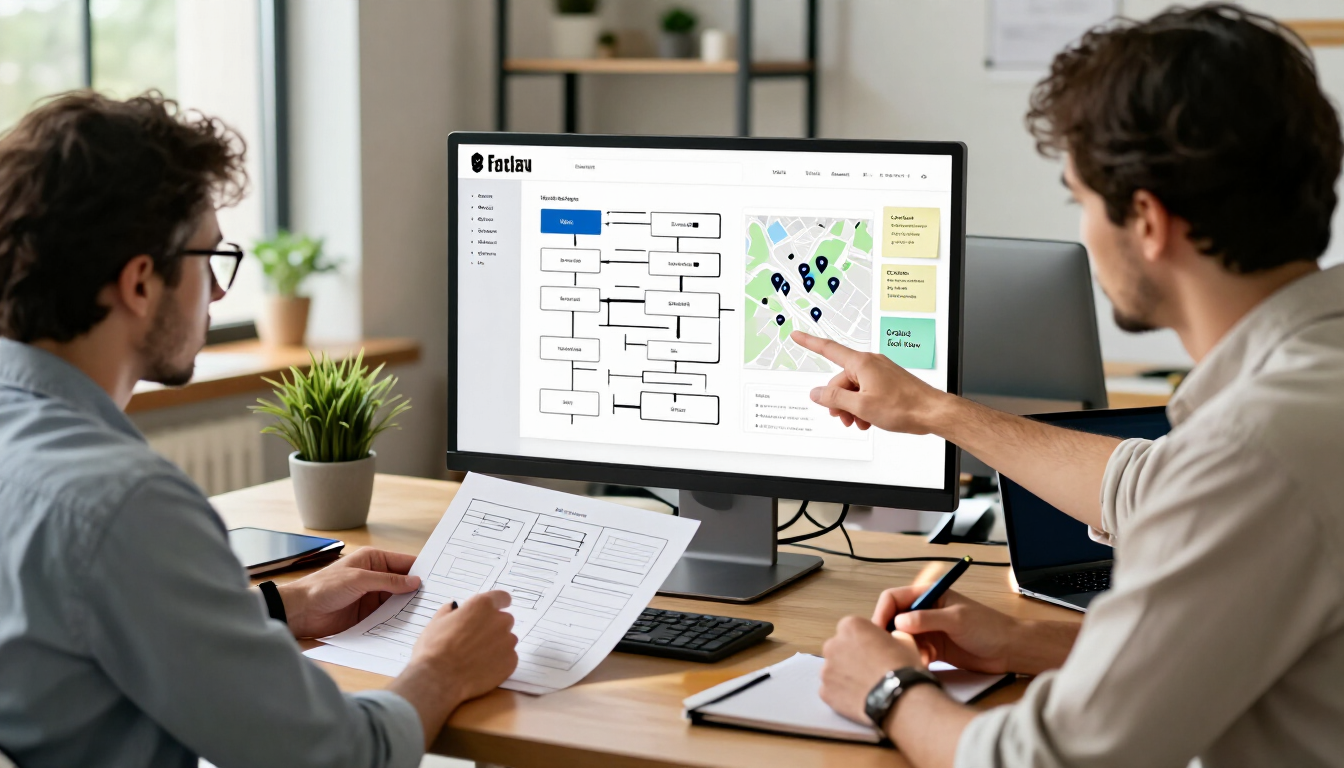
Web design team planning a local business website sitemap

What should small businesses consider about scalability?

Scalability means the website and agency relationship can support reasonable growth without requiring a complete rebuild every time your needs change. Consider whether you may add:

  • New services, locations, products, or team members
  • Online payments, booking, memberships, or customer accounts
  • CRM, email marketing, analytics, or automation integrations
  • Multiple languages or more complex content
  • Mobile applications or custom business tools

A national agency may have more resources for large expansions. A local agency may offer more continuity and a clearer understanding of your original goals. In either case, ask how the website is built, who owns the accounts, whether the platform can be maintained by another provider, and how future work is estimated.

Your website should not be made unnecessarily complex “for growth.” Choose technology that supports your likely next steps while remaining understandable and manageable today. Arthur’s Creatives also explains related options in its guide to digital solutions for growing businesses .

What outsourcing risks should you watch for?

Outsourcing is not automatically a problem. Many agencies use trusted specialists. The risk comes from unclear responsibility, limited visibility, poor documentation, or work that does not match what was promised.

Ask directly:

  • Will any design, development, content, or support work be outsourced?
  • Which company owns the client relationship?
  • Where are contractors or team members located?
  • Who reviews their work?
  • Who owns the code, designs, domain, hosting, and platform accounts?
  • What happens if a contractor becomes unavailable?

You should receive clear answers without being treated as difficult. Regardless of the agency model, maintain administrator access to your domain, hosting, analytics, business profiles, and important software accounts. Confirm ownership and handoff terms in writing.

Questions to ask before hiring a web design agency

Use these questions in discovery calls with both local and national agencies:

  1. Have you worked on websites with goals similar to ours?
  2. Who will do the strategy, design, development, and support work?
  3. What will we be responsible for providing?
  4. How will you learn about our customers and competitors?
  5. What platform do you recommend, and why?
  6. How do you handle SEO, accessibility, security, backups, and performance?
  7. How are revisions, new requests, and scope changes priced?
  8. Who owns the website and related accounts?
  9. What support is available after launch?
  10. Can you show us the process, not just finished work?

Review an agency’s portfolio , but do not judge only by visual style. Ask what problem each project addressed, what the agency contributed, and how the site is maintained. You can also compare the broader services available from a potential partner.

Small business owner discussing website launch support with digital agency

FAQ: local vs national web design agencies

Which is better for a small business: a local or national agency?

Neither is universally better. Choose a local agency when communication, regional understanding, and personal support are priorities. Choose a national agency when you need broader specialist resources, formal scale, or support for a large multi-location operation. Compare the actual team, process, ownership, scope, and support rather than relying on the label.

Is a local web design agency more expensive?

A local agency is not automatically more expensive. Price depends on project scope, expertise, technology, content, integrations, revisions, and support. Request itemized proposals and compare total costs, exclusions, account ownership, and post-launch terms.

What should I watch for when hiring a national agency?

Watch for unclear ownership, multiple handoffs, limited access to decision-makers, vague deliverables, restrictive contracts, and outsourced work that is not disclosed. Ask who will complete the work, who supports the site after launch, and how you can leave or transfer the project if needed.

Can a local agency work with a business outside its area?

Yes. Many local agencies work remotely with clients throughout the United States. Confirm communication tools, meeting availability, time-zone coverage, project documentation, and support expectations before hiring.

Should I meet a web design agency in person?

In-person meetings can be useful, but they are not essential for every project. A well-organized remote process can work effectively when goals, responsibilities, approvals, and communication channels are clear. Choose the format that helps your team make decisions and stay involved.

Final takeaway

Local and national web design agencies each have practical strengths. Local partners may offer personal communication, regional context, and flexible collaboration. National firms may provide larger specialist teams, formal systems, and capacity for complex growth. Your best choice is the agency that understands your business, explains its process clearly, protects your ownership, and provides dependable support after launch. Compare proposals based on total scope—not just price or location. Then choose the partner whose people, technology, communication style, and long-term approach fit the way your business actually operates.

Recent Posts

Small business owner comparing a Tampa mobile app development company
October 9, 2026
Compare Tampa mobile app developers with offshore teams, evaluate costs, support, ownership, rankings, timelines, and choose the right small-business partner.

Mobile app development companies in Tampa helping a small business review an app prototype
October 9, 2026
Learn how to evaluate mobile app development companies in Tampa, compare local and national firms, choose native or cross-platform development, estimate pricing and timelines, and avoid common hiring mistakes.

Tampa digital marketing agency strategy meeting for a small business
October 9, 2026
Why hire a local Tampa digital marketing agency for custom web and mobile app development? Compare local support with outsourcing and learn what to look for.
AI automation for Tampa businesses with an AI voice agent and CRM workflow
October 9, 2026
Learn how Tampa businesses can use AI voice agents, lead qualification, CRM, and n8n automation to reduce missed opportunities and measure growth.

Website development company in Florida consultation
October 9, 2026
Compare Florida website development companies using a practical checklist for experience, SEO, AI search readiness, pricing, security, accessibility, support, and communication.

Small business owner comparing automation agencies
October 9, 2026
Learn what automation agencies do, compare agency types, evaluate pricing and fit, spot red flags, and choose the right partner for your small business.

Agency project management team planning a website workflow
October 9, 2026
Learn agency project management with clear team roles, workflows, client communication, approvals, feedback, and scope-change strategies for small digital agencies.

Agency project management team planning a web project
October 9, 2026
Learn agency project management best practices for clear roles, smoother workflows, better client collaboration, and more reliable web projects.

AI automation solutions for small businesses on a laptop
October 7, 2026
Learn how AI automation solutions for small businesses streamline repetitive work, improve customer follow-up, and connect everyday tools without adding technical staff.

Person working on a laptop at a desk beside a notebook and coffee cup in a bright room
September 30, 2026
Get tips on choosing the right tech for your small business. Contact us for expert guidance today!